For thin content SEO, you should usually improve pages that have rankings, traffic, backlinks or clear business value. Delete or noindex pages that serve no useful purpose, get no engagement and cannoRead More
Ranking number one is not always the best SEO target because profit comes from the right visitors, not the biggest ego boost. Your SEO ranking goals should focus on enquiries, sales, margins and searcRead More
Yes, your About page can help your Google rankings, but not by magically ranking for every service you sell. Done properly, about page seo proves who you are, where you operate, why you’re credible anRead More
Anchor text is the clickable wording in a link. If you typed “anchor text what is” into Google, that’s the answer: it’s the bit people click and the bit search engines use to understand what the linkeRead More
Most normal business pages should have 3 to 8 useful internal links. Longer blog posts can have 8 to 15. The real answer to how many internal links per page is: enough to help users and Google, not soRead More
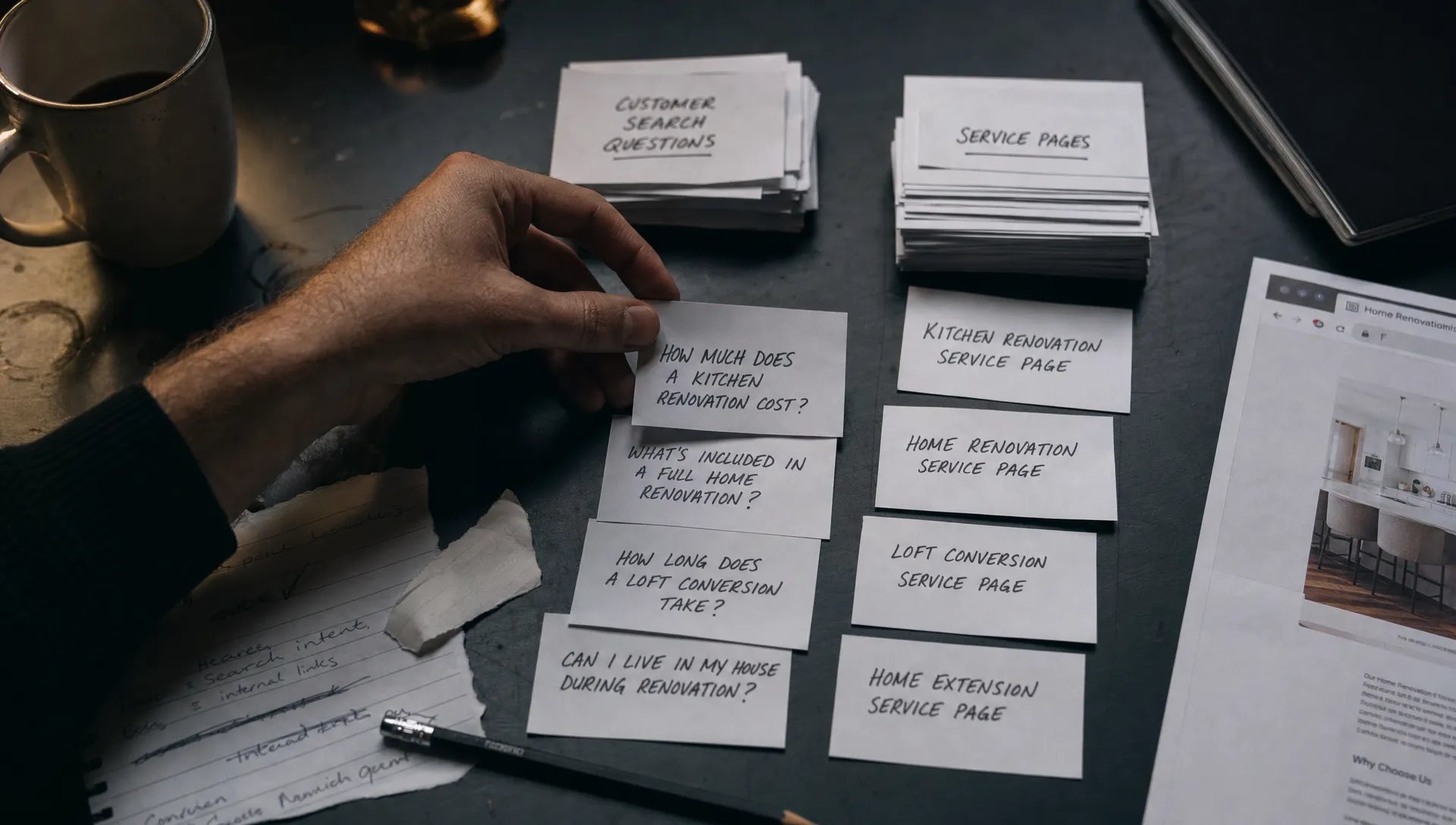
Content clusters SEO is a way of grouping your website content around the services, problems and questions your customers actually search for. You create one strong main page, support it with relatedRead More
Branded vs non branded search tells you whether people already know your business or are finding you for what you sell. A small business should track both, but judge growth mostly on nonbranded searchRead More
The keywords that generate enquiries are the searches people use when they’re ready to buy, book, call, compare or request a quote. Start with your real services, locations, urgent problems and “cost”Read More
Your business should target both informational vs commercial keywords, but not in the same way. Commercial keywords belong on the pages meant to win enquiries. Informational keywords belong in usefulRead More
The structured data types that help most small businesses are LocalBusiness, Product, Offer, Review, FAQ, Breadcrumb, Article and Event or JobPosting when they genuinely apply. Structured data is codeRead More