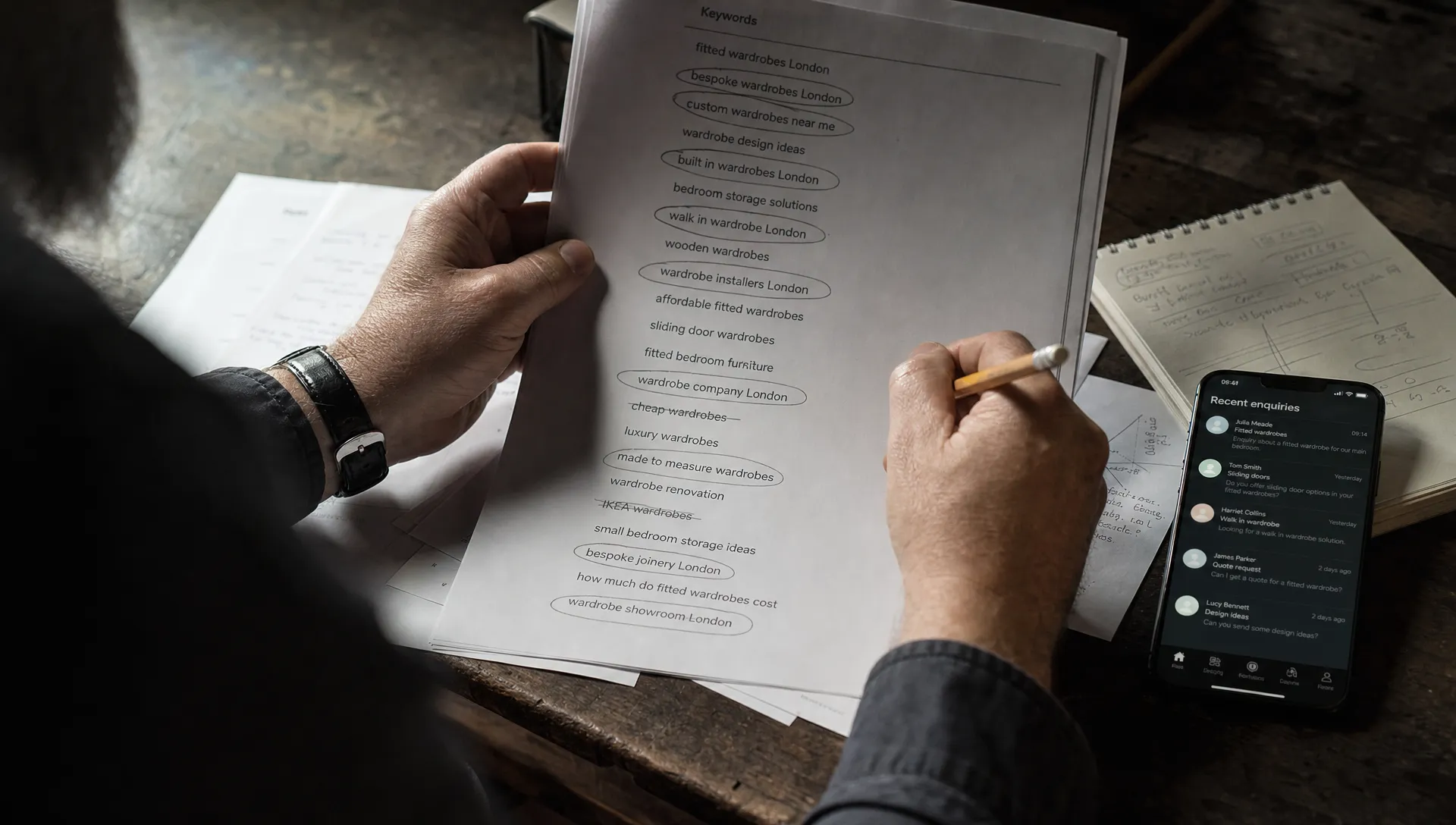
Search intent is the reason someone types a query into Google: they want to learn, compare, buy or find a particular business. Search intent SEO means giving them the right page for that job. It matteRead More
For image file size SEO, aim for roughly 50150 KB for ordinary content photos and 150300 KB for a large hero image. These are working targets, not Google rules. Resize to the space the image occupies,Read More
Yes, long tail keywords are still worth targeting when they match what your customers need and what your business sells. They’re searches with relatively low individual search volume, often describingRead More
Topical authority SEO means demonstrating useful, credible knowledge of the subjects your business actually handles. Yes, it can help you rank by making your content more relevant and helpful. But itRead More
For most small businesses, homepage seo should target your brand name and your main service or business category, adding your genuine location when you serve a local market. Put specific services andRead More
For most business websites, WebP is the best image format for SEO because it gives you smaller file sizes without wrecking image quality. Use JPEG for large photos when WebP is not practical, and PNGRead More
contact page seo matters because your contact page tells Google, and real customers, who you are, where you work and how people can reach you. It will not magically rank your whole site by itself, butRead More
WordPress categories and tags SEO can help or hurt your site. Used properly, categories create order and help visitors find related content. Used badly, tags create piles of thin, nearduplicate archivRead More
Prioritise SEO by finding the pages most likely to bring leads or sales, then fixing the problems that stop those pages ranking. With hundreds of URLs, seo prioritisation is not about doing everythingRead More
Content decay is when a page that once brought traffic, rankings or enquiries slowly loses them because the content, search intent or competition has moved on. In content decay SEO, the danger is notRead More