Category

On Page SEO

Effective on-page SEO for category sections plays a crucial role in enhancing a website’s visibility and user experience. By strategically optimising elements such as meta titles, meta descriptions, and headers within category pages, businesses can improve their chances of ranking higher in search engine results pages (SERPs).

What Is Search Intent and Why Does It Matter for SEO?

Search intent is the reason someone types a query into Google: they want to learn, compare, buy or find a particular business. Search intent SEO means giving them the right page for that job. It matte
Read More
A dark SEO office shows a desk of search queries and a laptop, suggesting how search intent is checked before writing.
11
Oct

What Are Long-Tail Keywords and Are They Still Worth Targeting?

Yes, long tail keywords are still worth targeting when they match what your customers need and what your business sells. They’re searches with relatively low individual search volume, often describing
Read More
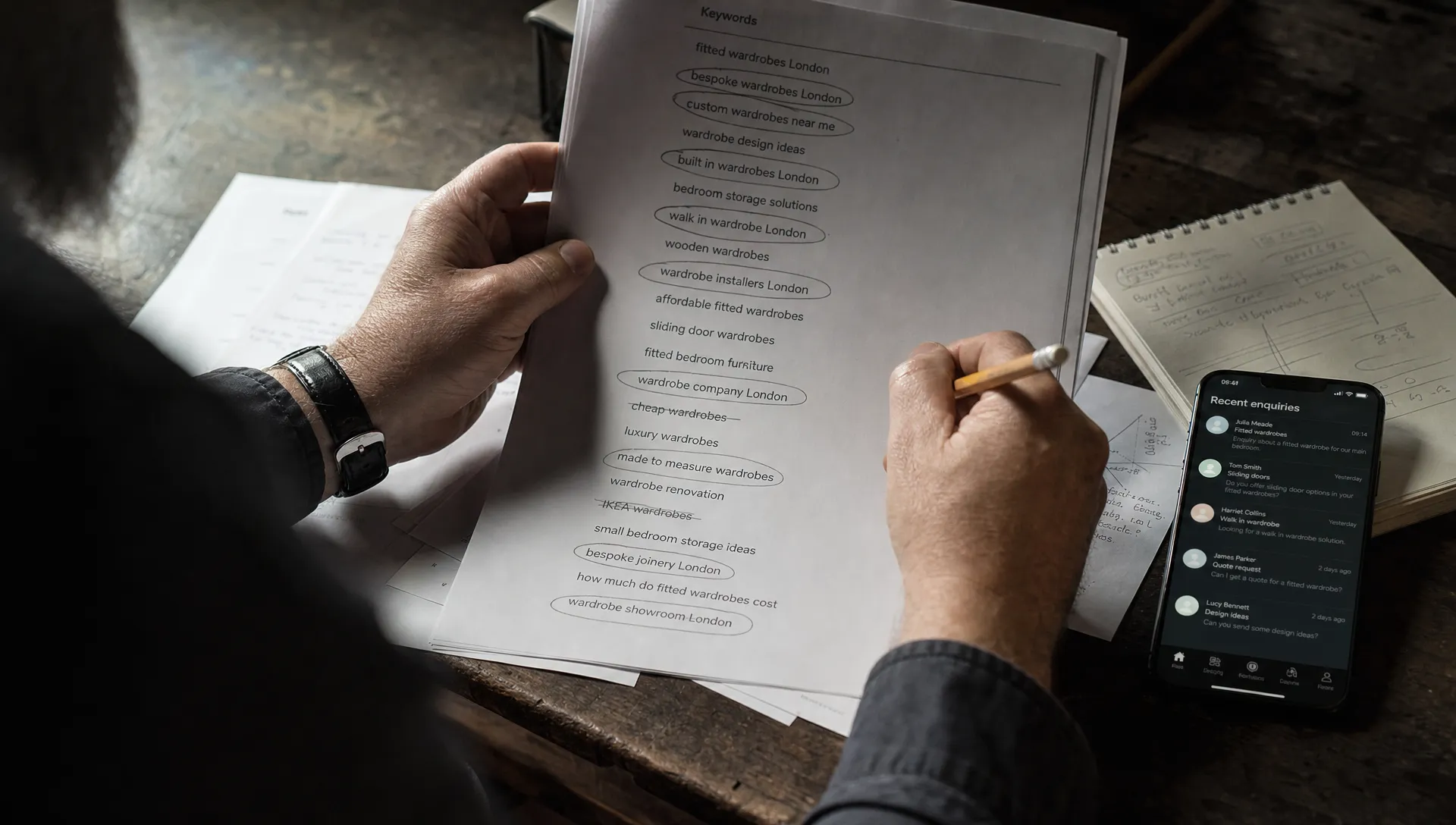
Hands sort printed search phrases beside a phone and notebook, showing the work of choosing useful long-tail keywords.
09
Oct

What Is Topical Authority and Does It Really Help You Rank?

Topical authority SEO means demonstrating useful, credible knowledge of the subjects your business actually handles. Yes, it can help you rank by making your content more relevant and helpful. But it
Read More
A technician’s hand over service notes and customer questions shows topical authority being built from real, useful depth.
08
Oct

Homepage SEO – What Should Your Homepage Actually Rank For?

For most small businesses, homepage seo should target your brand name and your main service or business category, adding your genuine location when you serve a local market. Put specific services and
Read More
A business owner and an SEO specialist review a homepage layout and service list at a table.
06
Oct

WordPress Categories and Tags – Are They Helping or Hurting Your SEO?

WordPress categories and tags SEO can help or hurt your site. Used properly, categories create order and help visitors find related content. Used badly, tags create piles of thin, nearduplicate archiv
Read More
A kitchen table holds blog notes and a laptop while someone checks categories and tags for their WordPress site after hours.
28
Sep

How to Prioritise SEO When Your Website Has Hundreds of Pages

Prioritise SEO by finding the pages most likely to bring leads or sales, then fixing the problems that stop those pages ranking. With hundreds of URLs, seo prioritisation is not about doing everything
Read More
A cramped back office with file boxes, binders and a page inventory on the desk suggests a large website being sorted for SEO priorities.
26
Sep

What Is Content Decay and How Do You Spot It Before Rankings Disappear?

Content decay is when a page that once brought traffic, rankings or enquiries slowly loses them because the content, search intent or competition has moved on. In content decay SEO, the danger is not
Read More
A small business owner checks an old website page at a kitchen table while leads have started to dry up.
25
Sep

Should You Delete Thin Content or Improve It?

For thin content SEO, you should usually improve pages that have rankings, traffic, backlinks or clear business value. Delete or noindex pages that serve no useful purpose, get no engagement and canno
Read More
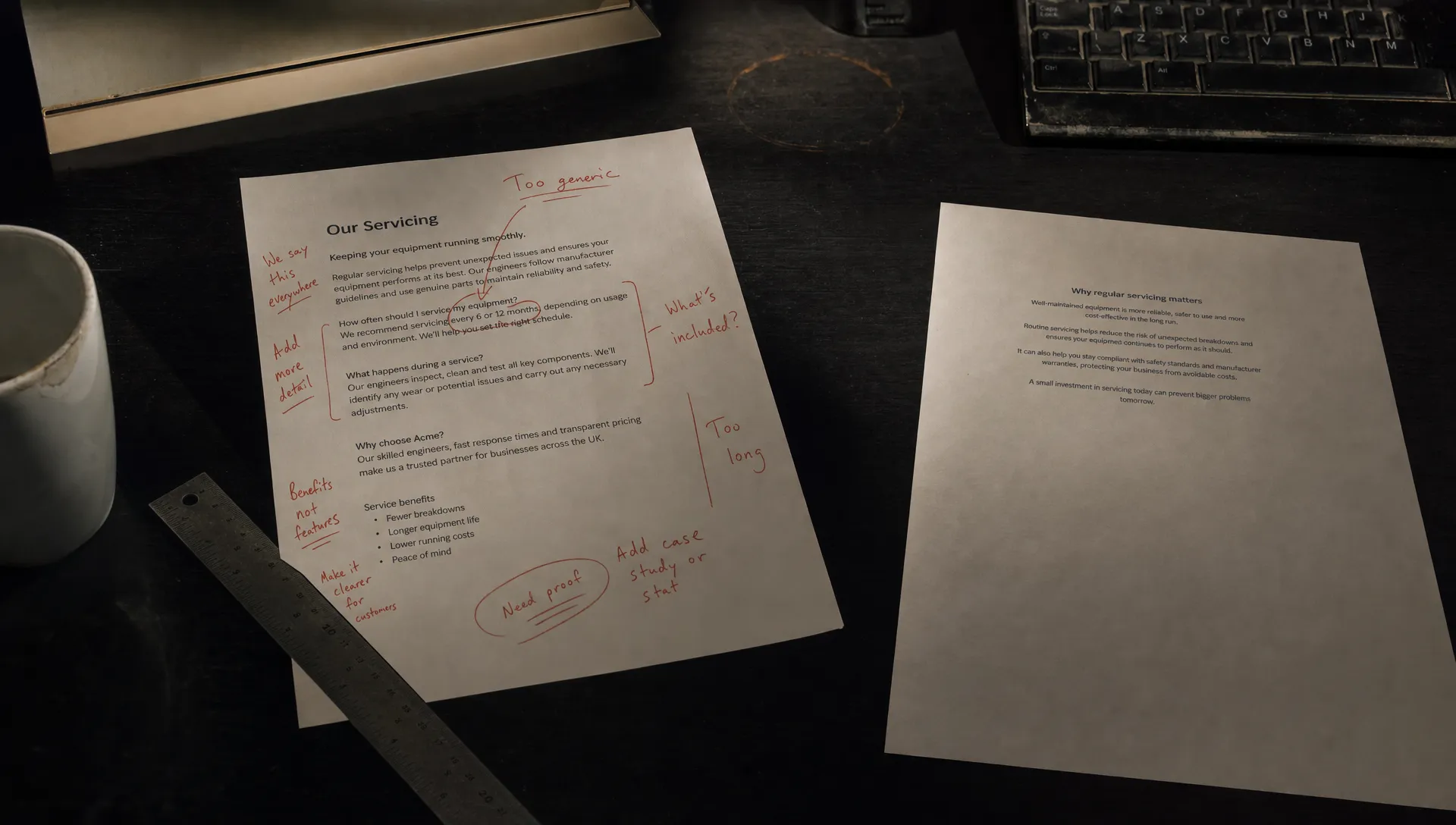
A marked-up service page sits on a dark desk beside a keyboard, showing thin content SEO being assessed for improvement or removal.
24
Sep

About Page SEO – Can Your About Page Help Your Google Rankings?

Yes, your About page can help your Google rankings, but not by magically ranking for every service you sell. Done properly, about page seo proves who you are, where you operate, why you’re credible an
Read More
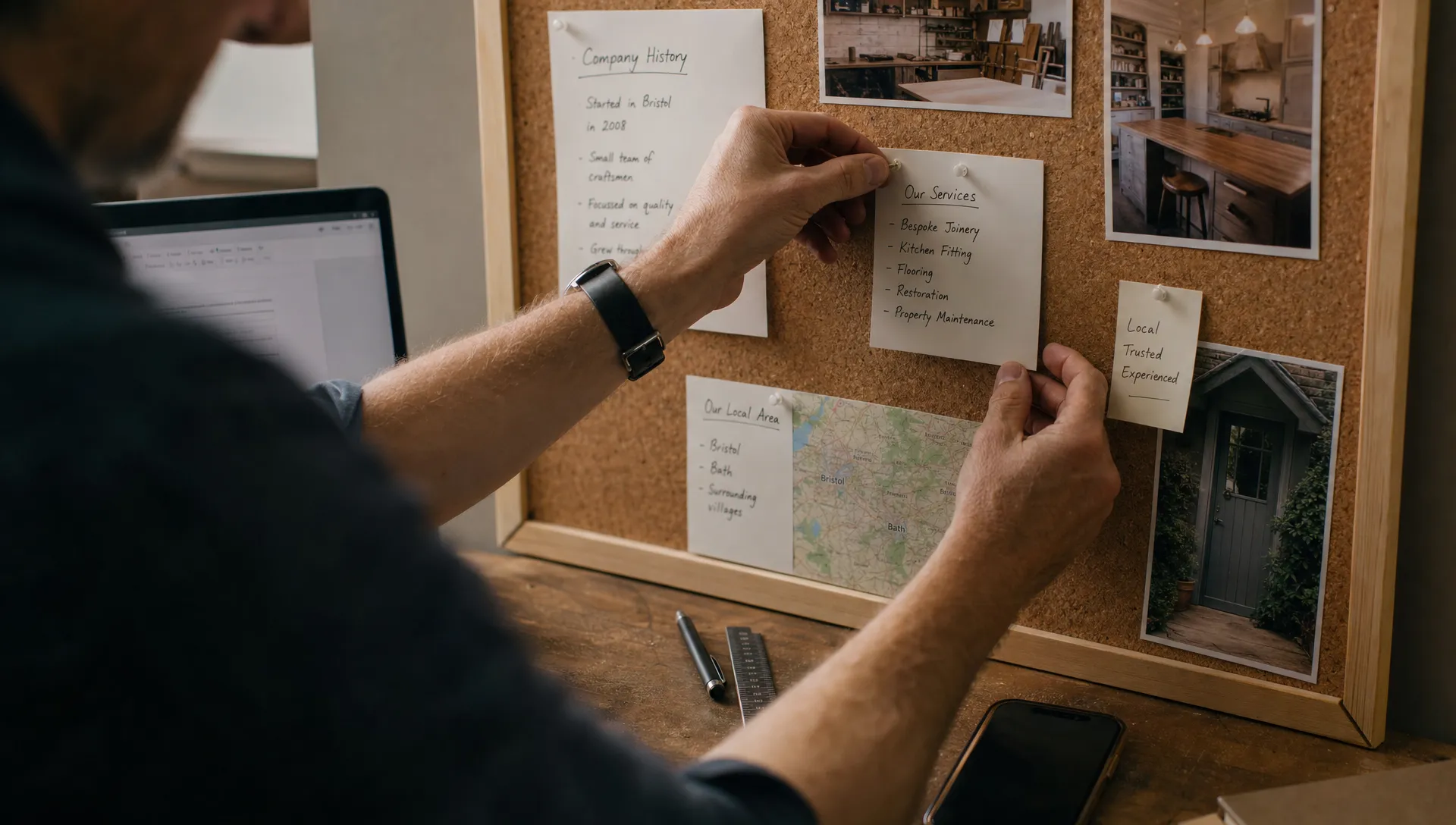
Hands pin company history and service notes beside a laptop while building the facts for an About page.
22
Sep

What Is Anchor Text and How Should You Use It for SEO?

Anchor text is the clickable wording in a link. If you typed “anchor text what is” into Google, that’s the answer: it’s the bit people click and the bit search engines use to understand what the linke
Read More
Two adults review website links at a desk with the anchor text article headline on the papers.
20
Sep
1 2 3 4 5